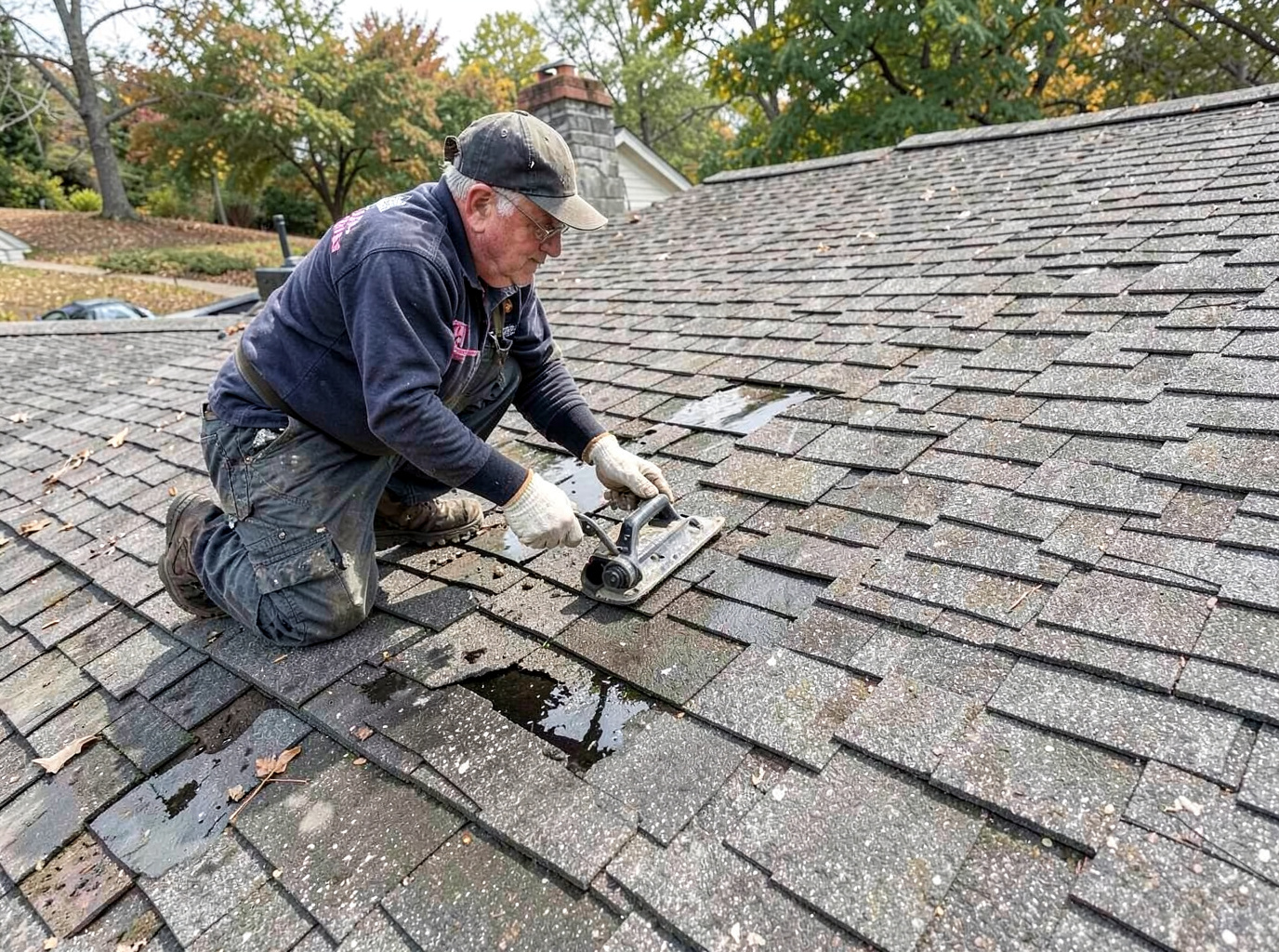
Weaver Lake sits in northwest Maple Grove with homes built mostly from the late 1970s through the early 2000s on larger lots that back up to the lake or wooded edges. Freeze-thaw cycles in Hennepin County winters push ice up under shingles along north-facing slopes, and summer storms dump heavy rain that finds old flashing around chimneys and skylights. Maple Grove Roof & Leak Pros works these streets year-round, parking trucks on cul-de-sacs off Weaver Lake Road so crews can reach steep lake-side roofs without blocking narrow drives.
Access to many properties runs along Weaver Lake Road or 101st Avenue, where mature trees drop debris that clogs gutters and lets water sit against the roof edge. Nearby Brooklyn Park and Osseo share the same humid continental weather, but Weaver Lake homes sit closer to open water, so humidity lingers and accelerates shingle wear on south exposures. Crews check attic ventilation first because many 1980s builds here have limited soffit intake that traps moisture after a leak starts.
When an emergency roof leak repair call comes from Weaver Lake, the team heads straight to the intersection of County Road 30 and Weaver Lake Road to reach the neighborhood fast. They carry extra underlayment for ice-dam sections and know which homes have low-slope additions added in the 1990s that trap snow differently than the main gables.
Around Weaver Lake, MN
We regularly work near:
- 📍Weaver Lake Park
- 📍Weaver Lake Elementary School
- 📍Weaver Lake Road
- 📍Elm Creek Park Reserve
- 📍Weaver Lake
Roof Leak Repair in Weaver Lake, MN — Local Notes
- •Homes near Weaver Lake Park often have walk-out basements and attached decks that create extra roof-to-wall transitions where leaks start after heavy spring rain.
- •Winter ice dams form quickly along the lake because cold air settles in the low spots; crews add extra heat cable runs on these roofs more often than in central Maple Grove.
- •Narrow driveways and mature trees limit crane access on many lots off Weaver Lake Road, so most repairs are done with ladders and roof jacks instead of lifts.
- •Drainage from the lake and surrounding wetlands keeps soil wet longer, so any roof runoff that reaches the foundation stays longer and can push water back into lower roof edges.